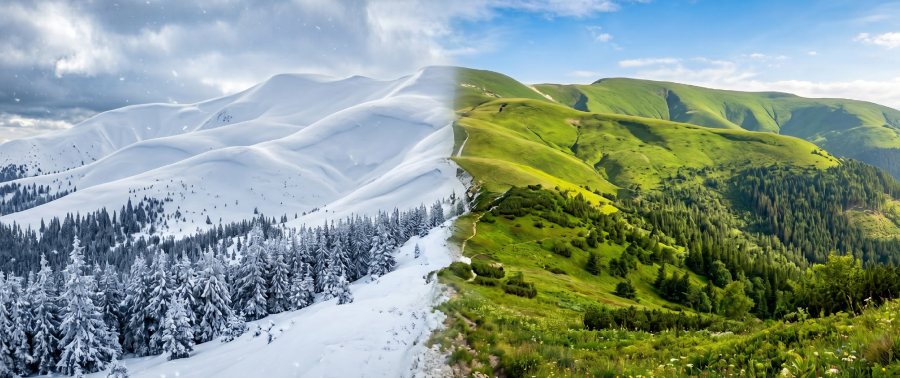
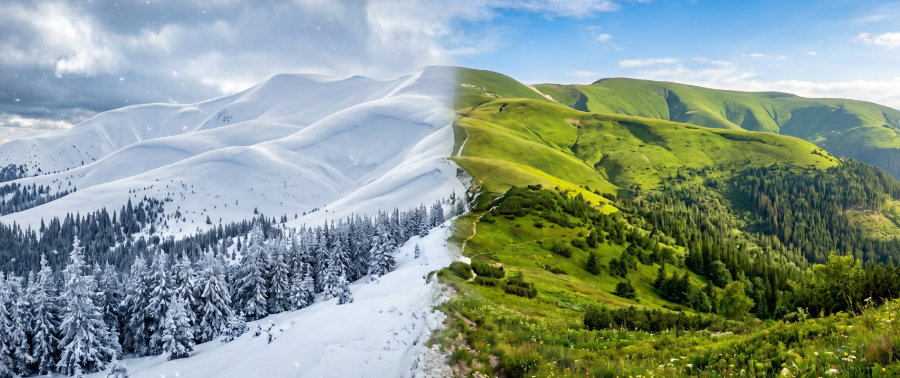
Some destinations are defined by winter. For years, Bukovel was one of them – a place where reliable snowfall, a predictable ski season, and a familiar rhythm could almost be taken for granted. December marked the beginning, March the end. Today, that rhythm is beginning to change.
Winter is becoming less predictable
The challenge is not the absence of snow, but its growing unpredictability. Temperatures now regularly rise above and fall below freezing. Snow arrives, then quickly melts. Rain in January is no longer considered unusual. These changes are reshaping everything, from seasonal planning to visitors' expectations.
Resorts can no longer rely on the weather alone
Where winter once naturally defined the season, our resort now plays a much more active role in maintaining it. Snowmaking systems, slope preparation, and water management have become fundamental elements of Bukovel's infrastructure rather than optional enhancements. Without them, the winter season would be far more vulnerable to changing weather conditions.
A much bigger transformation
The most significant shift, however, is strategic rather than technical.
Bukovel is steadily evolving from a winter-focused resort into a destination that offers memorable experiences throughout the year. Today it:
- welcomes visitors throughout the summer as actively as it does in winter;
- hosts festivals, sporting events, and cultural experiences;
- continues to develop hiking, nature-based recreation, wellness, and outdoor activities beyond skiing.
These experiences are no longer secondary – they have become an essential part of the resort's identity.
Climate is reshaping mountain tourism
For mountain resorts, climate change is not an abstract concept. It brings practical challenges: shorter winter seasons, higher operating costs, and greater dependence on technology. At the same time, it is accelerating changes that many destinations would eventually have needed to make.
A new model for the future
The transition can be summed up in a single shift – from being a resort built around snow to becoming a year-round mountain destination.
This means embracing a broader vision:
- offering experiences beyond skiing;
- creating reasons to visit in every season;
- managing climate-related risks instead of relying solely on favourable weather.
Conclusion
Bukovel is becoming an example of how mountain destinations can adapt to a climate where certainty is no longer guaranteed. Perhaps the greatest transformation is not technological, but philosophical: nature remains at the heart of the resort, while the relationship between people, tourism, and the environment continues to evolve.