For Bukovel, 2026 has marked a shift from individual initiatives towards a more systematic approach to sustainability. The resort achieved Green Key certification for the second consecutive year, received the Blue Flag for the Lake of Youth, published what it describes as the first comprehensive sustainability report in Ukrainian tourism, and made further progress on accessibility, inclusion, waste sorting and energy efficiency.
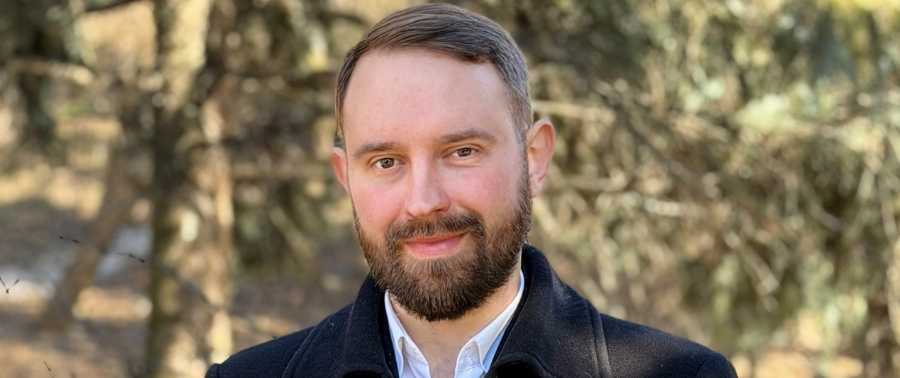
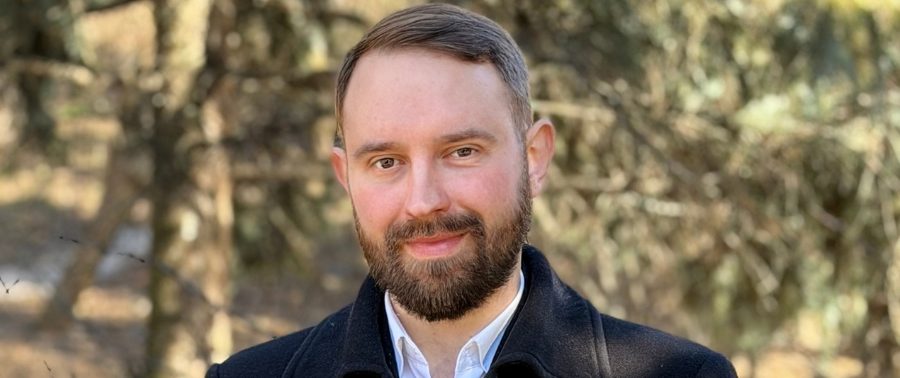
We spoke with Bohdan Krasavtsev, Head of Bukovel's Sustainable Development Office, about the achievements of the first nine months, the challenges that remain, why meaningful sustainability requires change throughout the company, and his vision for the resort's future.
— Bohdan, looking back at the first nine months of 2026, how would you describe this period?
— Turning individual initiatives into a coherent system. In 2025, we laid much of the groundwork. We established the Sustainable Development Office, developed Bukovel's Sustainable Development Strategy for 2025-2030, began building a waste sorting system, started working with Green Key, the international environmental certification programme for hospitality businesses, and prepared our first non-financial report.
The real test in 2026 was whether we could turn those ideas into established, ongoing processes. I believe we've largely succeeded over these nine months. We're no longer simply discussing sustainability as an ambition. We can point to tangible results: policies and documentation, international certifications, infrastructure improvements and new operational standards.
— One of the most visible achievements was receiving the Blue Flag for the Lake of Youth. Why does this matter so much to you?
— It's an achievement with particular symbolic importance. The Lake of Youth is one of Bukovel's best-known attractions. We wanted it to be recognised not only as a beautiful place to spend time, but also as a destination that meets international standards for quality, safety, environmental management and visitor information. Receiving the Blue Flag demonstrates that tourism infrastructure can develop alongside a commitment to environmental protection. It also shows how sustainability can become part of an ordinary visitor's experience rather than remain an abstract concept. Someone arrives at the lake and finds clean surroundings, clear information, a well-managed recreational area and established rules for visitors. Without necessarily thinking about it, they're experiencing sustainable practices in everyday life.
— Another major milestone was Bukovel's first sustainability report. Why do you consider it a historic achievement?
— Because it represents an important step forward for Ukrainian tourism. We published Bukovel's first-ever sustainability report, which was effectively the first comprehensive non-financial report of this scale in Ukraine's tourism industry. I was very clear that I didn't want it to be just a beautifully designed presentation. A meaningful sustainability report needs figures, measurable indicators and evidence of impact. It needs to address energy consumption, water use, waste, social responsibility and governance. These are things we can measure, monitor and be held accountable for.
Once you've published a report, you can't simply say, “We're doing various things to improve sustainability.” You have to explain exactly what you've done and demonstrate the results. That's why I consider the report one of our most significant achievements this year.
— Bukovel has now achieved Green Key certification for two consecutive years. What does this certification mean for the resort?
— For me, the key word is consistency. We achieved our first Green Key certifications in 2025 and successfully renewed them in 2026. This year, ten properties received certification: Beskyd Suites, Radisson Blu Resort, Glacier Premium Apartments, HAY by Edem Family, Tavel, Hvoya, Twins, Mountain Residence, Bukovel Hotel and Shelter Apart Hotel. Green Key isn't simply a certificate to display at reception. It involves meeting a wide range of criteria covering energy and water management, waste, procurement, environmental policies, guest information and staff practices. What matters most is that the work doesn't stop once certification is awarded. Quite the opposite: achieving certification marks the beginning of the next stage of improvement.
— Waste management is something you frequently discuss. What progress has been made in 2026?
— We've continued expanding our Bukovel Sorts programme. The programme focuses on collecting plastic, glass and paper separately, but equally importantly, making sure those materials actually go on to be recycled. That's a fundamental principle for me. I don't want us to be the kind of business that installs colourful recycling bins, takes photographs for publicity and then empties everything into the same waste collection vehicle.
We have an agreement with a contractor responsible for collecting our separated waste and arranging its subsequent handling and recycling. We've also continued collecting used disposable and rechargeable batteries. So far, we've collected more than 30 kilograms, which we've handed over to the organisation Batteries, Give Up! for recycling.
But I want to be clear: our system isn't perfect yet. We need more waste sorting points, better sorting habits among both employees and guests, and stronger oversight of the entire waste management chain. Sustainability is a process of continuous improvement.
— How is Bukovel progressing with energy efficiency and renewable energy?
— This is one area where we're still at the beginning of a much longer journey. In 2025, renewable sources accounted for approximately 2.5% of Bukovel's energy mix. We have a 0.6 MW solar installation on the roof of Parking Area No. 1, and we intend to keep expanding our generation capacity. Most hotel operators are taking similar steps. This year, our solar capacity has already increased to 0.7 MW.
But I don't want to give the impression that Bukovel has already become a fully “green” resort. It hasn't. We consume substantial amounts of energy, operate extensive infrastructure and welcome hundreds of thousands of visitors. Our responsibility is to steadily increase the proportion of clean energy we use, reduce overall consumption and improve the energy efficiency of our buildings and operational systems.
— You've also placed greater emphasis on inclusion and accessibility. What has been achieved so far?
— I believe this is one of the most important aspects of our social responsibility. We've begun taking a more systematic approach to making Bukovel an inclusive destination. What I particularly appreciate is that this work isn't being led by someone appointed merely to satisfy a formal requirement.
Our team includes Mykhailo Nalyvaiko, a veteran who uses a wheelchair. His personal experience means we can assess accessibility from the perspective of someone who encounters physical barriers every day, rather than approaching it as a purely theoretical issue.
We're working on barrier-free environments, accessible services, inclusive communication and policies supporting veterans. But again, I don't want to overstate our progress. We've made a start, and there's still an enormous amount to do. Inclusion is about much more than installing a ramp. It encompasses transport, hotels, restaurants, toilets, accessible information, digital services and, crucially, the attitudes of employees.
— How challenging is it to introduce sustainable practices across a large tourism company?
— Extremely challenging. Sustainability isn't something a single department can impose by announcing, “From now on, everyone must work in an environmentally responsible way.” It requires changes in behaviour across the entire organisation.
I can develop a waste sorting policy, but if employees don't follow it, that policy remains nothing more than a document. I can recommend an energy-efficient solution, but if the departments responsible for implementing it don't support the proposal, nothing changes. That's why the Sustainable Development Office's role isn't to take responsibility for every sustainability task itself. Our job is to help transform the company's culture so that these practices become part of how the whole organisation operates.
— Does sustainability sometimes become a subject of internal debate?
— Of course it does. And that's perfectly normal. When you start asking questions such as how much water we're using, where our waste ends up, why we choose particular materials, how transport is organised or whether a facility is accessible to someone with a disability, you're inevitably going to generate discussion. But I don't want my role to be simply pointing out what others are doing wrong.
My approach is straightforward: when we identify a problem, we should work together to find a solution. That's why I don't see the Sustainable Development Office as an “environmental police”. I see it as an internal partner helping the business improve.
— How do you deal with criticism?
— Learning to accept criticism is essential. It teaches us and can drive change both within the organisation and in how we interact with the world. At the same time, criticism needs to be supported by facts and reasoning. Otherwise, it's little more than an emotional reaction. And when criticism is constructive, I think the worst possible response is to pretend the problem doesn't exist.
The way I see it, sustainable development is about finding a balance between economic interests, nature and society. We can't simply decide to stop developing. Bukovel is a business. It creates jobs, provides services and is among the region's largest taxpayers. But being a business doesn't give us the right to say, “We can do whatever we want.” Genuine sustainability exists somewhere between those two extremes.
— Are you concerned that your projects might eventually be perceived as greenwashing?
— Greenwashing happens when what a company says gets ahead of what it actually does. If we install one plastic recycling bin and then publish ten posts about how environmentally responsible we are, that's greenwashing. And if we publish a sustainability report but aren't prepared to provide the underlying figures, that's a problem too. I believe in a simple principle: fewer statements, more measurable results.
Our sustainability report, Green Key certifications, Blue Flag award, energy performance indicators, water monitoring, waste sorting procedures and contracts with service providers all help us replace declarations with verifiable evidence.
— What would you like the Sustainable Development Office to have achieved by the end of this year?
— My goal is for sustainability to reach a point where, after 2026, nobody can reasonably describe it as simply “Bohdan's initiative”. That's extremely important to me. The Office can introduce a new process, but eventually that process needs to become an established part of Bukovel's operations.
We've developed a strategy through 2030. We have reporting procedures, international certifications, and environmental and social initiatives. The next step is institutionalisation: making sustainability part of the company's established management systems. That means incorporating it into budgets, key performance indicators, procurement decisions, construction projects, staff management and the planning of new facilities.
— What are the Sustainable Development Office's priorities for 2027?
— We have an ambitious agenda. First, we'll continue working towards Green Destinations. Our strategic objective is to meet at least 60% of its criteria and keep improving from there.
Second, we'll further develop our waste management system and improve energy efficiency.
Third, we'll expand our renewable energy initiatives.
Fourth, we'll significantly strengthen the social dimension of our work, focusing on accessibility, veterans, inclusion, working conditions and engagement with the local community.
Another important priority is supporting the local economy. I want Bukovel's development to create value not only for the resort itself, but also for the Polianytsia community and the Carpathian region. And, of course, our next sustainability report needs to be even more comprehensive and robust.
— What would you like Bukovel to look like in 2030?
— I'd like Bukovel to become a resort that can genuinely be recognised as one of Eastern Europe's leaders in sustainable tourism. Not because we've proclaimed it, but because the facts support it. Less waste. Lower resource consumption. More clean energy. Accessible facilities and services. A thriving local economy. Protected natural environments. Responsible business practices.
At the same time, I want Bukovel to remain a vibrant, welcoming resort where people come to relax, read books, go for walks, ski, enjoy good food, listen to music and spend time with their families. To me, sustainable tourism doesn't mean sacrificing comfort. It means finding a way for people, business and nature to thrive together.
— And what does working in the Sustainable Development Office mean to you personally?
— I think it's become more than just a job. I spent over ten years working as a journalist, covering environmental issues, socioeconomic challenges, business and startups. In 2020, I founded Ecological Nation, an NGO dedicated to encouraging environmental awareness and promoting sustainable development throughout society. I've also written children's books and songs about protecting the environment.
Then, in November 2024, I was given an opportunity to do something different: instead of simply reporting on change, I could help create it from within a major company. That's a fundamental difference. What motivates me is the opportunity to change not just how the organisation looks from the outside, but how it actually works internally. I'd like us to look back ten years from now and remember where it all began.
Here's where we installed our first waste sorting container. Here's where we published our first sustainability report. Here's where we achieved our first Green Key certification. Here's where we began addressing accessibility. Here's where we introduced solar power generation. And I'd like us to see how those small beginnings eventually helped create an entirely different organisational culture.
— If you had to sum up the first nine months of 2026 in a single sentence, what would you say?
— We've demonstrated that sustainability at Bukovel can become more than a statement of good intentions: it can be a genuine, functioning system of action. Our task now is to make those changes permanent and irreversible. And most importantly, we're only just getting started!
Interview by Oleksandra Mecheva