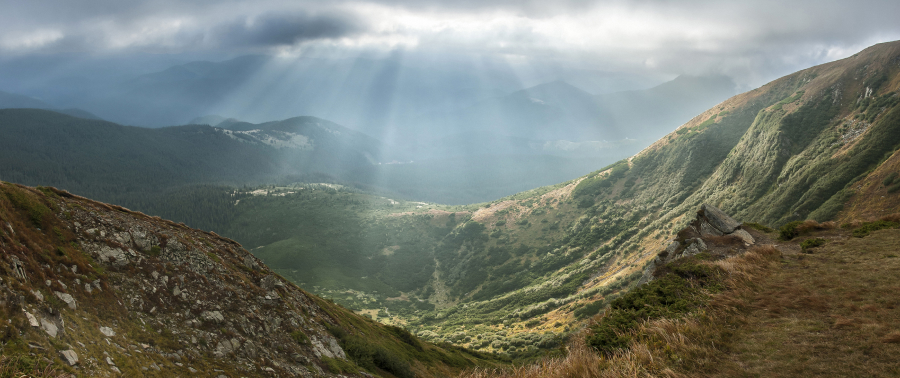
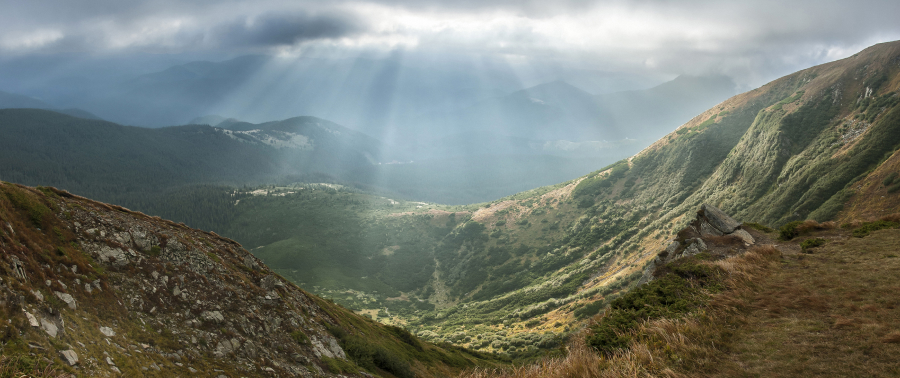
We are starting a new series dedicated to the protected landscapes of the Carpathians. Because behind every breathtaking panorama are people working quietly to protect forests, rivers, wildlife and rare plants – so that we can enjoy them now and future generations can inherit them.
Our first destination is the Carpathian National Nature Park. And the popular saying that you have not truly experienced the Carpathians until you have visited this park is not far from the truth. Ukraine’s highest mountain, Hoverla, rises within its territory. The legendary ridges of Chornohora and Gorgany stretch across the horizon, glacial lakes reflect the sky, ancient forests cover the slopes, and high above them stands the iconic White Elephant Observatory on Mt. Pip Ivan.
Ukraine's first national nature park
Established in 1980, the Carpathian National Nature Park became the first national nature park in Ukraine. Today it protects more than 50,000 hectares of exceptional mountain landscapes and remains one of the country’s most important conservation areas.
In 1996, the park became part of UNESCO's international network of biosphere reserves, recognising the global importance of its ecosystems and biodiversity.
Exploring the mountains responsibly
The philosophy here is simple: travelling through nature should never mean overpowering it.
More than 150 kilometres of ecological hiking trails have been developed across the park, ranging from accessible routes to more demanding mountain journeys. The trails lead through highland meadows, forests, rocky ridges and quiet valleys, allowing visitors to discover the Carpathians while reducing pressure on sensitive ecosystems.
Cyclists can also explore more than 10 designated routes throughout the park and neighbouring communities.
Before heading out, visitors can stop by the visitor centre to learn more about local wildlife, protected habitats, the history of the region and the distinctive traditions of Hutsulshchyna.
A landscape where nature still sets the rules
The park is divided into four functional zones: strictly protected areas, regulated recreation zones, stationary recreation areas and economic zones. This zoning helps balance public access with the protection of the park's most valuable natural habitats.
Its greatest treasure is the network of primeval and old-growth forests that have experienced very little human interference. These forests provide shelter for thousands of species and play an essential role in maintaining the ecological balance of the Carpathians.
More than 1,105 species of vascular plants have been recorded here, including 95 listed in the Red Data Book of Ukraine. Among them are Carpathian edelweiss, Eastern Carpathian rhododendron and many other rare plants found in these mountain ecosystems.
The park is equally rich in wildlife, with 1,467 animal species recorded. Brown bears, wolves, lynx, red deer and European roe deer roam its forests, while fire salamanders, golden eagles, black storks, capercaillies and numerous other rare species receive special protection.
The park also operates a wildlife enclosure and rehabilitation centre, where injured and orphaned animals are treated and, whenever possible, prepared to return to the wild.
The Carpathians as a place of restoration
The park offers more than spectacular scenery. Its territory includes unique mineral water springs of two different types, traditionally valued for their wellness properties.
For this reason, recreation have long formed an important part of the region’s relationship with the landscape.
Hutsulshchyna – the human story of the mountains
The Carpathian National Nature Park is as much about culture as it is about wilderness.
For centuries, Hutsul communities have built their lives around the rhythms of the mountains. Historic wooden churches, traditional crafts, music, local cuisine and a deeply rooted culture of hospitality add another layer to every journey through the park.
Here, it becomes clear that the Carpathians are more than a landscape. They are a way of life.
The people behind the protected landscape
The scenery enjoyed by millions of visitors does not preserve itself.
Scientists, foresters, environmental specialists, inspectors and recreation teams work here every day. They monitor natural processes, restore populations of rare species, protect forests, develop ecological trails, carry out conservation work and help both children and adults understand how to behave responsibly in nature.
Thanks to their work, the Carpathian National Nature Park remains a place where ecosystems still have the freedom to function according to their own natural laws.
So the next time you set out into the mountains, remember that every marked trail, clean stream and ancient forest is supported by years of patient, often unseen work. And perhaps the best way to thank the people who protect the Carpathians is simple: travel responsibly, leave as little trace as possible and treat the landscape with respect.
Because nature gives the most to those who know how to care for it.
Photo: part of the Carpathian National Nature Park near Hoverla. Photo from Wikipedia.