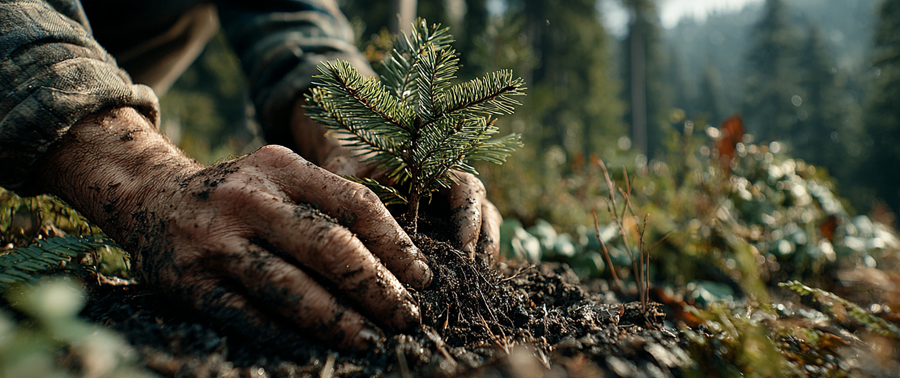
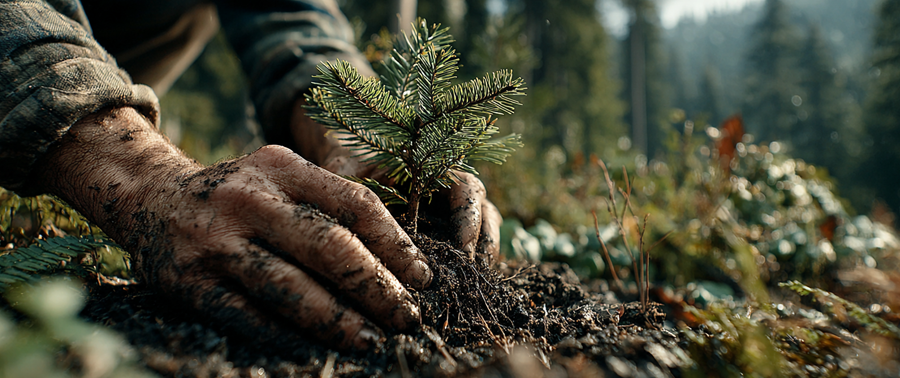
Spring in the Carpathians is more than renewal. It is a moment when nature restores its balance – and when people may choose to support it.
This is the ideal time to plant trees and shape green spaces. But modern landscaping is no longer about volume. It is about precision, responsibility and a clear understanding of the ecosystem you are working within. In the Carpathians, every tree becomes part of a living system, not just the view.
Why spring is the right time
Spring offers the most stable conditions for planting:
- Moisture-rich soil after snowmelt helps saplings establish faster and reduces the need for watering;
- Mild, stable temperatures allow roots to develop without stress;
- Natural growth cycles accelerate adaptation and root formation;
- A full growing season gives trees time to strengthen before winter.
In short, nature does most of the work for you.
Invasive species – hidden risk behind visual appeal
Decorative plants can be misleading. Fast growth and visual appeal often come at a cost:
- aggressive spread;
- displacement of native species;
- ecosystem imbalance;
- biodiversity loss.
In the Carpathians, this includes red oak, Canadian goldenrod, Himalayan balsam, Japanese knotweed, tree of heaven and black locust. Many were initially introduced as ornamentals – and became ecological threats later.
Landscaping as a sustainability tool
For a resort environment, the rule is straightforward: do not harm the nature you showcase.
Responsible landscaping means:
- prioritising native species adapted to local conditions;
- avoiding invasive decorative plants;
- designing landscapes that look and function naturally;
- monitoring and controlling plant spread.
Practical steps:
- avoid dumping plant waste in natural areas;
- regularly inspect green zones;
- remove invasive species early.
What works best in the Carpathians
The natural forest composition already provides a clear guideline:
- Norway spruce – the core mountain species;
- silver fir – good for damp slopes;
- European beech – builds stable forest ecosystems;
- sycamore maple – adds structural diversity;
- birch – supports natural regeneration;
- grey alder – perfect for damp and riverside areas.
Shrubs instead of ornamental exotics: viburnum, hazel, hawthorn, rosehip, honeysuckle, elderberry – all support wildlife and require minimal care.
Ground cover instead of lawns: clover, thyme, Carpathian bellflowers, sedges, forest grasses, ferns – more resilient, less maintenance, more natural.
The principle is simple: do not “design nature” – replicate it. That is how landscapes stay authentic, require less intervention and genuinely support the Carpathian ecosystem.