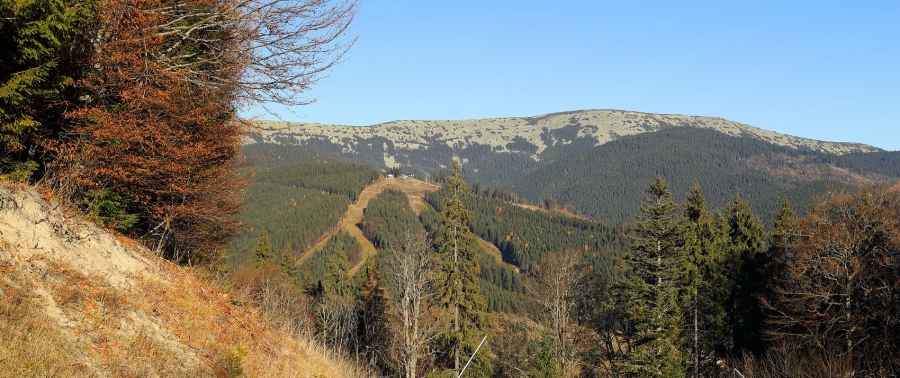
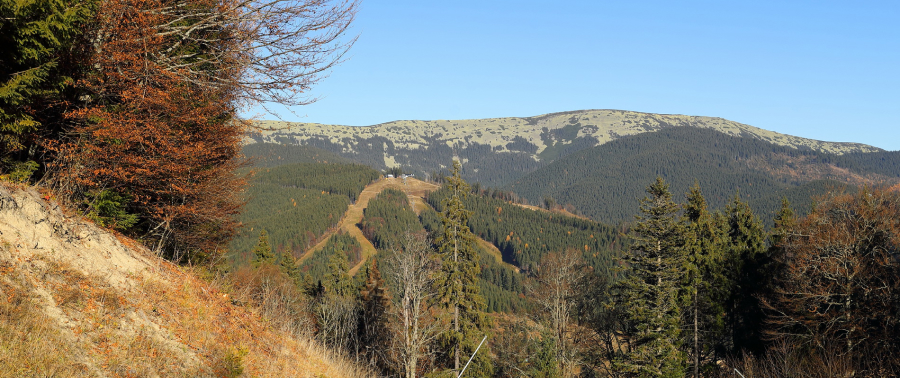
As you approach Bukovel, the majestic summit of Mount Syniak comes into view. To today's travellers, it may seem like a beautiful landmark along a popular hiking route. Yet its slopes hold secrets that reach far back into the Carpathians' ancient past. This is a tale of a time when other powers watched over the mountains, and when the strength of human belief could move entire sanctuaries or conceal them deep beneath the earth.
Long before Christianity reached the region, pagan priests known as volkhvy served the ancient gods. Among the deities they worshipped was Baba, the mighty guardian of water, mist and mountain peaks. It was she who filled rushing streams and rivers with healing waters and wrapped the Carpathian summits in clouds. The sparkling mountain streams brought life and health to every living creature, while the towering peaks drew people's thoughts towards the heavens, encouraged them to contemplate the grandeur of the world and guarded them against reckless deeds.
Sanctuaries devoted to Baba once stood throughout Hutsulshchyna, the traditional Hutsul lands. Their traces survive to this day in the names of villages, landscapes and mountain summits. Near Kosiv stands the village of Babyn Horodskyi, which still bears its ancient name. The summit of Strahora is also called Baba, and an old sacrificial stone remains there. Between Yaremche, Vorokhta and Yasinia lies a place known as Babyna Yama (Baba's Pit). Mt. Syniak once bore Baba's name too. It belongs to the Gorgany, a highland area of the Carpathians formed by three mountain ridges. And even today, when mist gathers in the mountains ahead of bad weather, locals say, "Baba is smoking."
For generations, the mountain people gave thanks to Baba for her gifts and pleaded with her never to leave them. In return, she generously nourished their forests, wells, rivers and streams with the vital force that kept the wheel of life turning.
But history brought change to the mountains. With Christianity gradually replacing the old beliefs, representatives of the new faith, together with appointed governors, sought to put an end to ancient customs as quickly as possible. At their urging, the former sanctuary was officially given the disparaging name "Parshyva Baba" (Wretched Baba) – in an effort to undermine the people's reverence for their ancestral protectress. Rumours swept across the region that princely warriors were destroying the old sacred sites. The local people found themselves torn between two worlds: they were obliged to follow the new laws, yet their hearts remained loyal to the traditions their ancestors had cherished for centuries.
And then, according to the legend preserved in local memory, something extraordinary happened. One morning at daybreak, villagers looked towards the mountain and saw its summit veiled in a golden mist. The mysterious glow surrounded the peak and its sanctuary until midday, when it slowly faded away. Baba was gone. She had descended beneath the earth. From that day onwards, the great stones scattered across the mountain took on shades of blue, from pale azure to deeper hues.
In time, low shrubs began to grow across the slopes, bearing the juicy, deep-blue berries, almost black in colour, that people still gather today. These are blueberries, known in the local dialect as afyny. According to tradition, they are a gift from Baba herself, a sign that the ancient guardian continues to watch over her people.
Following the teachings of the pagan priests, the mountain people began collecting not only the berries but also their leaves for medicinal use. As the plants spread throughout the Carpathians, they became cherished treasures of the mountains and a symbol of protection in the Hutsul world.
Some of these beliefs remain alive today. Mountain dwellers still try to eat as many blueberries as they can during summer, believing this will help keep poverty away. And some continue the custom of placing blueberry twigs beneath their doorstep mats to prevent malicious or envious visitors from entering their homes.
And so Baba, an enduring part of the Gorgany, received the name by which we know it today – Syniak.