Bukovel
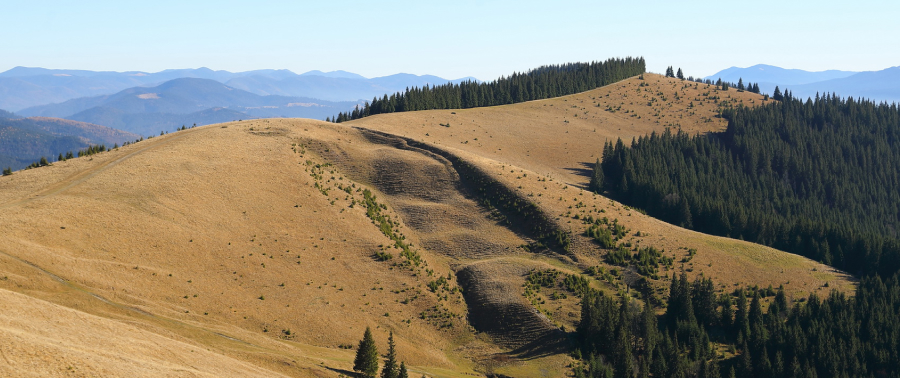
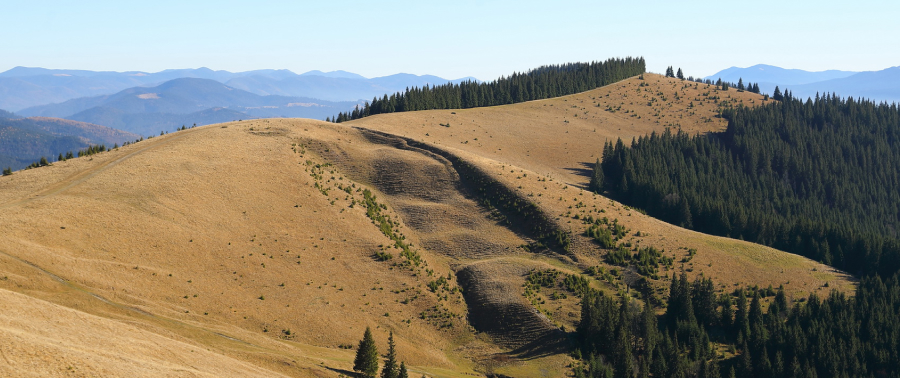
Bukovel takes its name from Mt. Bukovel, located within the Polianytsia Village Council area. In the local Hutsul dialect, the mountain is known as Bukoviel, a name interpreted as either “a place covered with beech trees” or “a withered beech tree”.
This is where the resort's first ski lifts were installed, with Bukovel Hotel subsequently built at the foot of the mountain.
Polianytsia
One explanation traces the village's name to the word polianytsia, referring to a forest clearing or an area where trees were burned to make way for farming or other activities. It can also describe an open meadow surrounded by forests and mountains.
For many years, the village appeared in official documents under the incorrect spelling Palianytsia. This error persisted throughout the Soviet period and into the early years of Ukraine's independence, until 2002.
Yablunytsia
Yablunytsia is named after the nearby mountain of the same name, which rises to 1,006 metres. The village stretches across its slopes and foothills.
A local legend offers a more picturesque account of the settlement's beginnings. According to the story, large wild apple trees once stood where the village centre is today. Travellers and herders moving their livestock would regularly stop beneath their branches to rest.
For a long time, the area remained simply a familiar resting place. Then, one year, someone built a house among the apple trees. Other families gradually followed, and a village grew around the site. It became known as Yablunytsia, a name associated with apple trees.
Voronenka (known as Voronenko until 2025)
The name of this high-altitude village is believed to come from Voronenko, the surname or nickname of its earliest settler.
The surname has historical roots among Cossacks and townspeople and is associated with the traditional personal name Voron, meaning “raven”, or the adjective "voronyi", meaning “dark-haired”.
Interestingly, local Hutsuls have traditionally called the village Voroninka or Voronenka, reflecting the name that became official in 2025.
Bystrytsia
Bystrytsia (the name used since 1946). The village takes its name from the Bystrytsia Nadvirnianska River, which rises in the mountains above the settlement. The name evokes the river's swift, powerful and turbulent mountain waters.
Rafailova (the historical name). This earlier name is believed to honour Rafail, a woodcutter or hunter who, according to tradition, was the first to settle in the surrounding forests and establish a community.
Yaremche (known as Yaremcha until 2006)
The most widely accepted explanation connects the town's name with Yarema Hodovanets, believed to have been its first settler.
According to local tradition, Yarema was a poor man or fugitive who made his home in this mountain gorge during the 18th century. The settlement's earliest written mention dates to 1787.
Ukrainian writer Stepan Pushyk proposed another interpretation. He suggested that Yaremche might derive from the root yarem, associated with an arch or bow, reflecting the curved course of the Prut River as it flows around the settlement.
Tatariv
Local historical accounts link the name Tatariv to the destructive Tatar raids that affected the region during the 17th century, particularly in the aftermath of an attack in 1673.
The name is therefore traditionally understood as a reminder of that turbulent period in the area's history.
Vorokhta
The best-known legend attributes the village's name to Mykhailo Vorokhta, believed to have been its first settler.
According to the story, he had deserted the Austrian army and settled in the area, where he became known as a skilled weaver. People also sought his advice, often saying, “I'm going to Vorokhta.” Over time, his name became associated with the settlement itself.
Other explanations link Vorokhta to the word "vorokhy", referring to firewood used in salt production, while alternative theories suggest that the name may have Turkic or Sanskrit origins.
Mykulychyn
Mykulychyn is believed to have been named after a historical landowner called Mykula (Mykola).
According to local tradition, he was a military commander, prince or boyar who once controlled the surrounding lands.